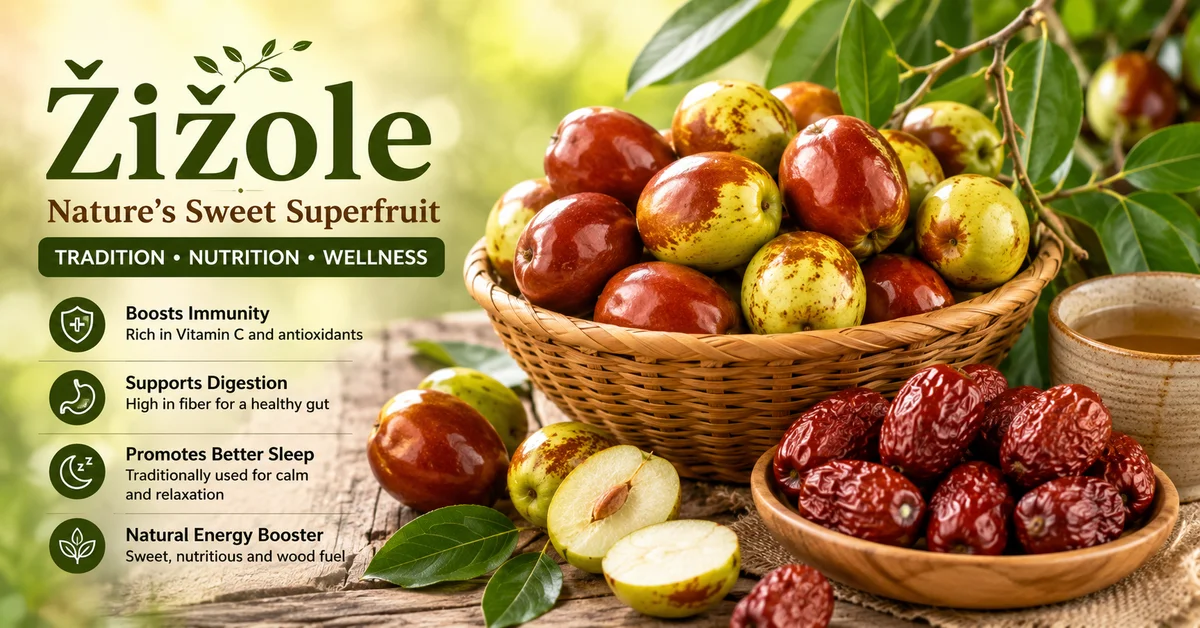
Žižole is the local name for jujube fruit, the edible fruit of Ziziphus jujuba. It is a small fruit that is eaten fresh or dried, and it has long been valued both as food and as a traditional remedy. In modern English, it is often called jujube fruit or Chinese date, but it is botanically distinct from the common date palm.
The fruit has a simple charm: crisp and apple-like when fresh, sweet and chewy when dried. That easy versatility is one reason žižole keeps appearing in nutrition discussions, heritage-food stories, and wellness recipes. It is also why many people now think of it as a practical superfruit rather than just an old-fashioned specialty fruit.
The name “Chinese red date” comes from appearance and taste, not from being a true date. When žižole dries, it becomes wrinkled and darker, which makes it resemble a date, while its sweetness and convenient storage also add to the comparison. That nickname has helped the fruit travel across markets and cultures.
The common names can be confusing, but the science is straightforward: Ziziphus jujuba is the species, and jujube fruit is the most widely used English name. In Balkan and Mediterranean settings, žižole is the familiar word, and in international nutrition writing, jujube is usually the keyword readers search for first.
Related: Alaskan Seiti: Health Benefits & Nutrition Guide
History and Cultural Significance of Žižole
Ancient Use in China and Traditional Medicine
Žižole has a long history in China, where it has been cultivated and used for centuries in food and Traditional Chinese Medicine. Reviews of the plant describe it as both a food crop and a medicinal fruit, with a long record of use for calming, nourishing, and restorative purposes.
That deep tradition matters because it gives the fruit a strong cultural identity. Žižole is not a trend invented by modern marketing alone; it comes from a real history of everyday use, seasonal eating, and herbal practice. That heritage is part of its appeal today, especially for readers looking for natural foods with a story.
Spread to the Mediterranean and Balkans
From Asia, jujube spread widely through trade and cultivation, eventually becoming part of the Mediterranean region and neighboring European food cultures. Historical sources also note its long presence around the Mediterranean basin, which helps explain why it feels local in some coastal and southern European communities.
In the Balkans, žižole has remained a familiar seasonal fruit in certain areas, especially where warm, dry conditions support fruit trees well. This regional identity gives the fruit a special charm: it belongs to ancient food history, but it also fits modern gardens, markets, and home kitchens.
Nutritional Profile of Žižole
Vitamins and Essential Minerals
Žižole nutrition is one of the main reasons the fruit is drawing attention. Research summaries and extension resources describe jujube as a fruit rich in vitamin C, along with useful amounts of potassium, calcium, phosphorus, and other micronutrients. Fresh fruit is especially known for its vitamin C content.
This nutrient mix makes žižole more than a sweet snack. It is a fruit that can fit into a balanced diet with real value, especially for people who want simple foods that bring both flavor and nourishment. The exact composition varies by variety, ripeness, and drying method, but the overall picture is consistent: jujube is nutrient-dense and practical.
Antioxidants, Flavonoids, and Fiber Content
Žižole is also a superfruit rich in antioxidants. Reviews describe flavonoids, phenolic compounds, polysaccharides, and other bioactive components in the fruit, which help explain why it is often discussed in antioxidant-focused nutrition writing. These compounds are one reason the fruit is linked with healthy aging and general wellness.
Fiber is another strength. Jujube is commonly described as one of the digestive health fruits because fiber supports fullness and regularity. In simple terms, žižole gives you sweetness, texture, and nutrients in one compact fruit, which is a big part of its growing popularity among people searching for organic superfruits and natural energy booster foods.
Health Benefits of Žižole
Boosting Immunity Naturally
One of the best-known žižole benefits is its connection with immune support. Because it is among the high vitamin C fruits, it is often discussed as part of immune system-boosting foods. Vitamin C supports normal immune function, and the fruit’s antioxidant content adds to that wellness profile.
That said, it is best to keep the message balanced. Žižole is not a miracle cure, but it is a smart fruit choice that can contribute to a healthy diet. Its value comes from steady nourishment, not hype. That honest framing is one reason people trust traditional foods when they are presented carefully and clearly.
Supporting Digestion and Gut Health
Žižole is often grouped with gut health fiber fruits because its fiber can support digestive comfort and regularity. Traditional and modern food writing both point to its role in easy daily digestion, especially when eaten as part of a balanced diet with enough water and whole foods.
Many people also appreciate žižole because it is gentle and simple. It does not require complicated preparation, and its mild sweetness makes it easy to enjoy in small amounts. For readers looking for natural sleep remedy fruit or digestive support foods, žižole stands out because it has both a culinary role and a long record of traditional use.
Sleep Improvement and Stress Relief
In Traditional Chinese Medicine, dried jujube is commonly used for its calming reputation. Modern reviews describe the fruit as a classic medicinal food in traditional systems, often associated with nourishing and soothing uses. That is why people frequently mention žižole tea benefits when talking about evening wellness routines.
The safest way to describe this benefit is as a traditional and early-research-supported use, not a guaranteed treatment. Still, many people enjoy the ritual: warm tea, mild sweetness, and a sense of calm. That combination gives žižole a special place among herbal wellness tea ingredients and other comfort foods used at the end of a long day.
Žižole as a Superfruit
Why It Competes with Modern Superfruits
Žižole earns its žižole superfruit reputation because it combines several desirable traits: sweet flavor, useful fiber, vitamins, antioxidants, and simple storage. It does not need flashy branding to be useful. It just needs the right audience, and that audience is growing.
Compared with many trendy superfruits, jujube has the advantage of tradition. It has a place in food history, herbal practice, and home cooking. That makes it feel both ancient and fresh at the same time, which is exactly the kind of balance today’s health-conscious readers often like.
Unique Nutritional Advantages
One standout feature is the difference between fresh and dried forms. Fresh fruit is lighter and juicier, while dried fruit is more concentrated in sweetness and calories. This gives žižole a flexible nutritional identity: it can be a light snack or a more energy-dense ingredient depending on how you use it.
Another advantage is practicality. Unlike many delicate fruits, dried žižole stores well, travels well, and fits easily into teas, snacks, and kitchen recipes. That is one reason it has become a favorite among people who want convenient, natural energy booster foods without giving up heritage flavor.
Fresh vs Dried Žižole
Taste, Texture, and Nutritional Differences
Fresh žižole is crisp, mild, and pleasantly juicy. Many people describe its flavor as somewhere between an apple and a soft pear, with a refreshing finish. Dried žižole is denser, sweeter, and chewier, which is why it is so often compared to a date.
Nutritionally, dried fruit is more concentrated. That means more sugar and calories per serving, along with a stronger, richer flavor. Fresh fruit is lighter and better for people who want a more refreshing snack, while dried fruit works well when you want depth, sweetness, and longer shelf life.
Which One Is Better for Daily Use
There is no single winner. Fresh žižole is ideal when the fruit is in season, and you want a crisp, clean bite. Dried žižole is better when you need convenience, pantry storage, or a tea ingredient that can be used any time of year.
For most people, the best choice is the one that fits the moment. Fresh for snacking, dried for cooking and brewing, and both in moderation as part of a varied diet. That flexible approach makes žižole one of the easiest Mediterranean fruit cultivation success stories to bring into daily life.
Culinary Uses of Žižole
Žižole Tea and Herbal Drinks
Žižole tea is one of the most beloved ways to enjoy the fruit. Dried jujube is often simmered in water and sometimes paired with ginger, cinnamon, or other herbs. The result is a warm, fragrant drink that fits well into evening routines and cozy seasonal menus.
The appeal is simple: the tea is easy, soothing, and naturally sweet. That makes it especially attractive to people looking for gentle herbal wellness tea ingredients without artificial flavors. It also highlights the fruit’s role as more than a snack; žižole can be part of a peaceful ritual.
Desserts, Jams, and Snacks
Žižole works beautifully in jams, compotes, baked goods, and snack mixes. Fresh fruit can add brightness to desserts, while dried fruit adds richness and a deeper sweetness. Because it holds up well in cooking, it is easy to use in both traditional and modern recipes.
For home cooks, this is one of the fruit’s biggest strengths. You do not need advanced skills to enjoy it. A handful of chopped dried žižole in granola, a spoonful of jam on toast, or a few pieces mixed with nuts can be enough to make the fruit memorable and enjoyable.
Smoothies and Healthy Recipes
Fresh žižole can also be blended into smoothies or chopped into fruit bowls. It pairs well with yogurt, oats, seeds, and nuts because its sweetness is soft rather than overpowering. That makes it a useful ingredient for balanced breakfasts and snacks.
The best recipes keep the fruit simple. Žižole does not need heavy decoration to shine. Its natural flavor, gentle aroma, and chewy texture already give it enough personality to stand out in modern kitchen use.
Traditional and Medicinal Uses
Role in Traditional Chinese Medicine (TCM)
In Traditional Chinese Medicine, jujube is one of the classic medicinal plant fruits. Reviews describe dried fruit as a commonly used herbal food in traditional formulas, especially for its nourishing and calming role. This is part of the reason žižole has remained respected across generations.
The important point is balance. Traditional use does not replace medical care, but it does show why the fruit has endured. A food that stays in use for centuries usually does so because people find it useful, pleasant, and reliable. Žižole fits that pattern very well.
Folk Remedies in the Balkans and Mediterranean
In the Balkans and the Mediterranean region, žižole has also been used in folk food traditions and home remedies. The fruit’s easy drying, storage, and brewing make it practical for households that value seasonal ingredients and simple wellness habits.
This regional use matters because it helps explain why the fruit still feels familiar in some local markets. It is not only a botanical species; it is a cultural fruit. That cultural identity gives žižole an edge over products that may be nutritionally interesting but emotionally forgettable.
Growing and Harvesting Žižole
Ideal Climate and Soil Conditions
Žižole tree growing is appealing because the tree is hardy. Agricultural and extension sources describe jujube as tolerant of full sun, well-drained soil, drought, and a wide range of soil conditions. It performs well in warm, somewhat dry climates, and several sources note its strong resilience once established.
That toughness is a big reason the fruit has become interesting to gardeners and small growers. In a world where water efficiency matters, a drought-resistant fruit tree that can still produce useful fruit is a major asset. Žižole offers beauty, productivity, and practicality in one plant.
Harvesting and Storage Methods
Fruit is usually harvested when it reaches the desired stage of ripeness, depending on whether it will be eaten fresh or dried. Fresh fruit is best handled gently, while dried fruit can be stored for much longer in airtight conditions. That storage flexibility is part of what makes žižole so useful in real life.
For home use, storage is simple. Keep fresh fruit cool and dry, and keep dried fruit sealed away from moisture. This makes it easy to enjoy žižole across seasons, which is one reason it continues to be valued as both a kitchen fruit and a pantry staple.
Modern Market and Global Demand
Rising Popularity as a Superfood
Žižole is gaining new attention because people want foods that feel natural, versatile, and meaningful. The rise of the superfruit market has helped jujube move from specialty food status into broader wellness conversations. Its mix of sweetness, convenience, and heritage gives it strong consumer appeal.
Modern interest is also driven by curiosity. Many readers discover jujube fruit žižole for the first time through health content, tea blends, or traditional recipe searches. Once they learn the fruit can be eaten fresh, dried, or brewed, it becomes much easier to see why demand keeps growing.
Organic Farming and Sustainability Trends
There is also increasing interest in organic superfruits and low-input farming systems. Jujube fits that trend well because it can perform in dry conditions and adapt to a range of environments. For growers, that can mean fewer resources and more resilience.
Sustainability is part of the modern story here. A fruit tree that is useful, hardy, and culturally rich has an advantage in a market that values both nutrition and environmental responsibility. Žižole checks all three boxes without trying too hard.
How to Add Žižole to Your Daily Diet
Simple Snacks and Tea Ideas
The easiest way to enjoy žižole is to start small. Eat fresh fruit as a snack, or keep dried fruit nearby for quick energy and flavor. If you enjoy warm drinks, steep dried jujube in hot water for a simple tea that fits morning or evening routines.
These small habits make the fruit feel easy rather than special-occasion-only. That matters because the best healthy foods are the ones you can actually repeat. Žižole works well in that role, which is why it is becoming a favorite for people building sustainable wellness routines.
Meal Prep and Wellness Uses
For meal prep, add chopped dried žižole to oatmeal, yogurt, granola, or trail mix. You can also simmer it into sauces, jams, or compotes. Because the fruit is sweet on its own, it can reduce the need for extra sugar in some recipes.
That makes it practical for busy days. The fruit supports a positive, flexible food routine without demanding much effort. In a fast world, that simplicity is a real advantage.
Related: Insoya: The Complete Guide to Modern Soy Protein
Frequently Asked Questions
What is žižole?
Žižole is the local name for jujube fruit, the edible fruit of Ziziphus jujuba. It is eaten fresh or dried and is known for its sweet flavor and long traditional use.
Are fresh žižole and dried žižole different?
Yes. Fresh fruit is crisp and lighter, while dried žižole is sweeter, chewier, and more concentrated in sugar and calories. Both can be enjoyed, depending on your taste and routine.
What are the main žižole benefits?
The main benefits of žižole are its vitamin C, fiber, and antioxidants, as well as its traditional use in calming teas and nourishing foods. It is best seen as a supportive food rather than a treatment.
How to eat žižole?
You can eat it fresh as a snack, dry it for later use, brew it into tea, or add it to desserts, oats, and trail mixes. Its mild sweetness makes it easy to use in simple recipes.
Is žižole good for growing in dry climates?
Yes. Jujube is known for strong drought tolerance and its ability to grow in warm, sunny, and well-drained conditions. That makes it a practical fruit tree in many dry regions.
Summary
Žižole is more than a traditional fruit. It is a flavorful, nutrient-rich, and easy-to-use food that connects history, taste, and wellness. From its vitamin C, fiber, and antioxidants to its long-standing place in Traditional Chinese Medicine, it offers a strong mix of tradition and modern relevance.
If you are looking for a fruit that feels both comforting and exciting, žižole is a strong choice. It is simple enough for everyday use, yet distinctive enough to feel special. That balance is rare, and it is exactly what makes it worth knowing.
The lasting appeal of žižole comes from trust. People have eaten it for generations because it is useful, pleasant, and adaptable. Today, that same fruit is finding new life in health food circles, garden planning, and thoughtful home cooking.
In the end, Ziziphus jujuba is a fruit with depth. It is the Chinese red date, the jujube fruit, and the beloved žižole all at once. That many names for one fruit usually mean one thing: it has traveled far, and people have kept it for a reason.